
Silence(d)
Have you noticed how it feels to be silenced?

Over the last year I have taken a break from most street protest in order to show up in other spaces and in other ways but last weekend saw me once again reaching for my kids’ art supplies and back on the streets.
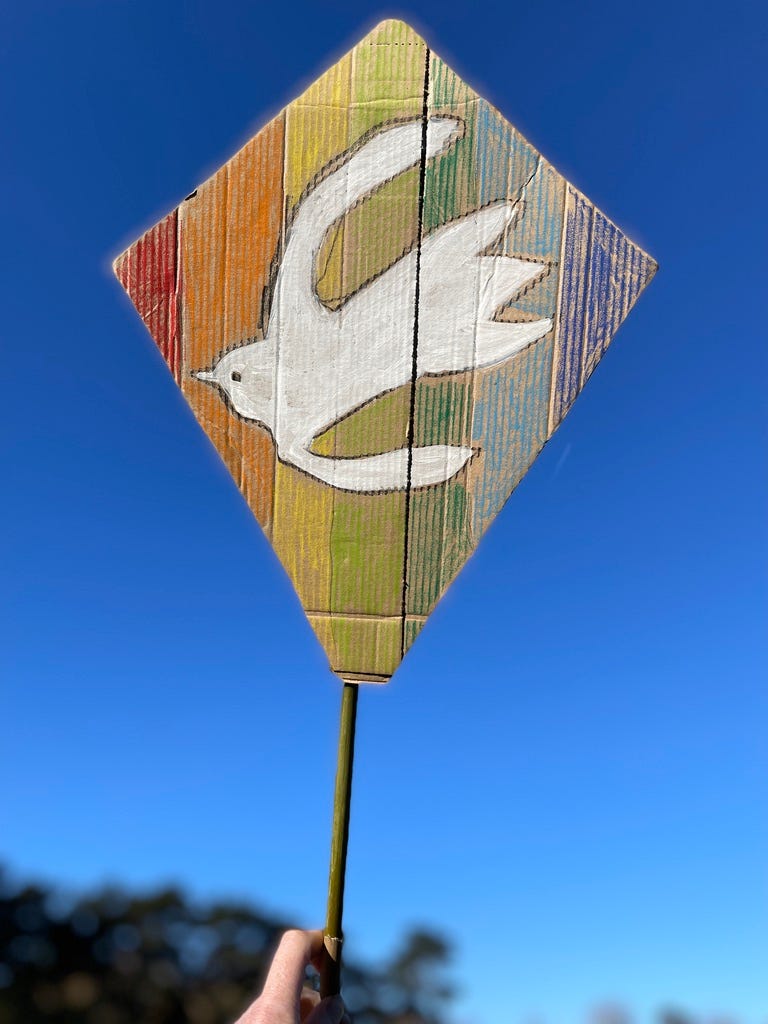
I’ve been reflecting recently on our collective relationship with law and the legal system and ways in which law is often being used to keep us disconnected and disempowered. Regulation and red tape have long been favoured tools of governments trying to prevent protest and activism (think barriers to registration, visa restrictions, funding restrictions etc), but the proscription of Palestine Action as a terrorist group is a significant and dangerous escalation of efforts by the government to use regulation to prevent protest.
And: it changes how it feels to protest.
The moment of leaving the house for a protest is always the time I feel most nervous. Is my sign clear enough? Hard-hitting enough? Witty enough?
Will anyone else be there?
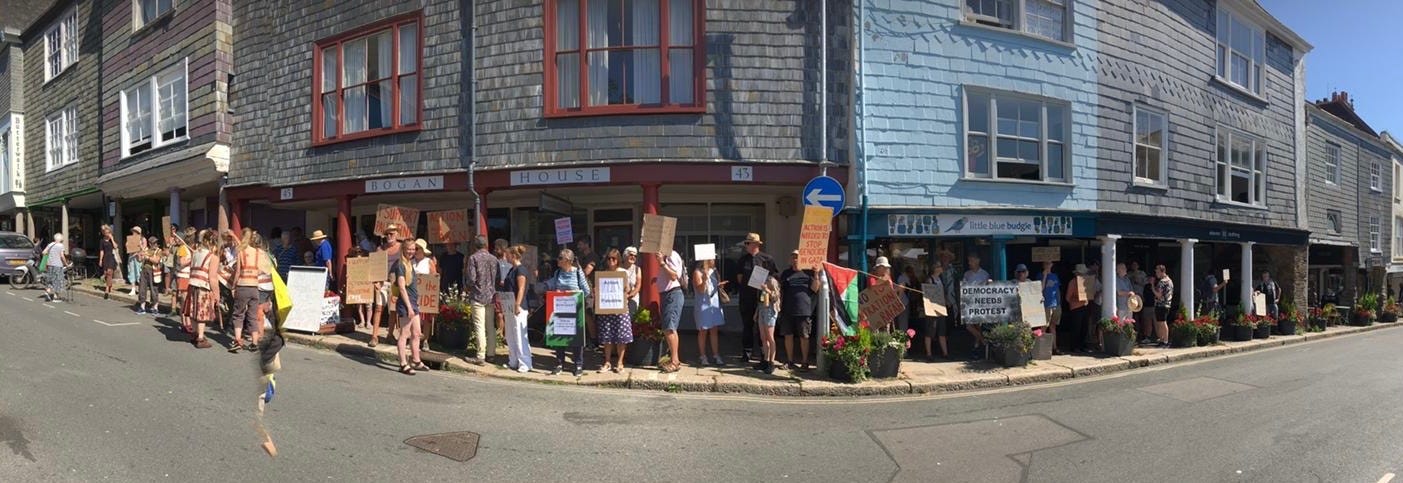
This time it felt heightened. In the days before conversations had veered to the kafka-esque:
‘If I put those words on a sign does that risk me being arrested for supporting a terrorist organisation?’
‘If I put these words in a different colour will that lower the risk?’
‘Can I still oppose the genocide in Palestine?’
‘Do I have to erase all social media posts showing support for action in Palestine?’
How police will choose to enforce the proscription across the country at that stage was unknown; there have since been some very worrying arrests of people voicing opposition to the genocide in Palestine. I knew people who weren’t joining as they were nervous about possible consequences of tangling with terrorist legislation.
I found myself snapping at my kids who were coming along around family weekend logistics and while supportive of the cause (watermelon earrings were carefully chosen), frankly didn’t want to be there.
The emotional rollercoaster of joining a protest, of raising our voice against the systems we live within, is significant. Even for a relatively experienced protester with social capital and significant privilege. Even in a relatively safe country. The comfortable option is definitely to stay quiet and I keep finding myself coming back to this statement: this is what it feels like to be silenced.
I recently facilitated a session for Our Kids’ Climate with a group of activists and organisers on closing civil society space. Of those on the call, not one person – myself included - was in a country ranked by Civicus as having open space for civil society. 100% of the participants from the global south said that they feel directly threatened with physical violence for their work, much of which is awareness raising.
I was struck on that call that everyone who joined was hungry for space to talk about how it feels to keep doing this work despite threats and opposition.
The longer I work in movements and climate organising, the more I recognise that talking about how this work feels builds community far faster than talking about strategies and tactics.
At that moment of trying to leave the house with a hastily-constructed protest sign and two reluctant children, I was deeply grateful to friends who I knew would meet me in town despite their own nerves. As individuals we know that courage is contagious. Knowing that others were nervous but still showing up made it easier for me to do so.
I’m now left wondering: what would it look like to share on a much larger scale what it feels like to do this work in a climate of increasing systemic barriers to campaigning, organising and care work?